7 Warning Signs You Have Vitamin D Deficiency — Health Vault
🌿 New: Science-backed health guides updated for 2026 — Explore All Articles →
Home Health Tips 7 Warning Signs You Have Vitamin D Deficiency
Health Tips April 11, 2026 ⏱ 9 min read Last updated: May 2026

7 Warning Signs You Have Vitamin D Deficiency (And How to Fix It)

Nearly 42% of adults worldwide are vitamin D deficient — most without even knowing it. Discover the silent symptoms and evidence-based solutions.

AS
Ahsan Saeed
SEO Specialist & Health Writer
📖 9 min read 👁 Science-Backed
7 Warning Signs of Vitamin D Deficiency
⚡ Quick Answer

The 7 main warning signs of vitamin D deficiency include: fatigue, bone pain, muscle weakness, depression, hair loss, slow wound healing, and frequent illness. The fix involves sunlight exposure, dietary changes, and supplementation (1,000–4,000 IU daily for most adults).

42%Adults are deficient worldwide
1 BillionPeople have insufficient Vitamin D
4,000 IUSafe upper daily limit (NIH)

Vitamin D is often called the "sunshine vitamin" — and for good reason. Your body produces it when sunlight hits your skin. But in today's world of desk jobs, indoor lifestyles, and sunscreen use, vitamin D deficiency has become one of the most common nutrient deficiencies globally.

The tricky part? Most symptoms are subtle and easy to dismiss. You might chalk up your tiredness to a busy schedule, or your low mood to stress. But if you have multiple symptoms on this list, it's worth getting a blood test.

⚠️ Important Note

This article is for informational purposes only. If you suspect vitamin D deficiency, please consult your doctor for a 25-hydroxyvitamin D blood test — it's the only accurate way to confirm deficiency.

Sign #1 — Persistent Fatigue & Low Energy

1
You're Tired All the Time — Even After Sleeping

Vitamin D receptors are present in areas of the brain that regulate sleep and energy. When your levels are low, your mitochondria (the energy factories of your cells) don't function optimally — leaving you feeling drained regardless of how much sleep you get.

💡 Research: A study in the North American Journal of Medical Sciences found that fatigue severity significantly decreased after vitamin D supplementation in deficient patients.

Sign #2 — Bone & Back Pain

2
Aching Bones, Especially in Your Back, Legs & Hips

Vitamin D is essential for calcium absorption. Without it, your bones become soft (a condition called osteomalacia in adults), leading to deep bone pain that feels different from muscle soreness. Lower back pain is especially common.

💡 Key fact: Vitamin D deficiency doubles your risk of bone fractures and osteoporosis over time (NIH, 2023).

Sign #3 — Muscle Weakness

3
Weak Muscles — Difficulty with Stairs, Lifting, Standing Up

Vitamin D receptors are found in muscle tissue. Deficiency impairs muscle protein synthesis, reducing strength and coordination. This is especially common in older adults and increases fall risk significantly.

💡 Pro tip: If you're exercising regularly but not gaining strength, low vitamin D could be the hidden factor limiting your gains.

Sign #4 — Depression & Mood Changes

4
Persistent Low Mood, Anxiety, or Seasonal Depression

Vitamin D plays a role in regulating serotonin — the "feel good" neurotransmitter. Low levels are strongly linked to depression, particularly Seasonal Affective Disorder (SAD), which peaks in winter months when sunlight is scarce.

💡 Study: Meta-analysis of 31,424 people found a significant association between vitamin D deficiency and depression (PubMed, 2022).

Sign #5 — Hair Loss

5
Thinning Hair or Unexplained Hair Shedding

Vitamin D stimulates hair follicle cycling. Deficiency can cause alopecia areata — patchy hair loss — or general thinning. Studies show that people with alopecia have significantly lower vitamin D levels than those without.

💡 Note: Hair loss has many causes. Vitamin D is just one factor — thyroid issues, iron deficiency, and stress are others worth checking.

Sign #6 — Slow Wound Healing

6
Cuts & Scrapes Take Longer Than Usual to Heal

Vitamin D controls the production of compounds crucial for forming new skin during wound repair. It also has anti-inflammatory properties that help regulate healing phases. Low levels slow this entire process down.

💡 Research: Test tube studies show that vitamin D increases production of compounds important for forming new skin as part of wound healing.

Sign #7 — Frequent Illness & Infections

7
You Keep Getting Colds, Flu, or Respiratory Infections

Vitamin D directly enhances the function of immune cells — T cells and macrophages — that protect your body against pathogens. It also triggers the production of antimicrobial peptides that fight bacteria and viruses.

💡 COVID connection: Multiple studies during the pandemic found that people with low vitamin D had significantly higher rates of severe illness.

How to Fix Vitamin D Deficiency

The good news: vitamin D deficiency is one of the easiest nutritional deficiencies to address. Here are the three main approaches:

☀️ Method 1 — Sunlight (Best Natural Source)

10–30 minutes of midday sun exposure on arms and legs, 3–4 times per week. People with darker skin may need longer. In winter or cloudy climates, sunlight alone is rarely sufficient.

🥗 Method 2 — Food Sources

Best food sources include: fatty fish (salmon, mackerel, sardines), egg yolks, fortified milk & orange juice, beef liver, and mushrooms exposed to UV light. Food rarely provides enough on its own.

💊 Method 3 — Supplementation (Most Reliable)

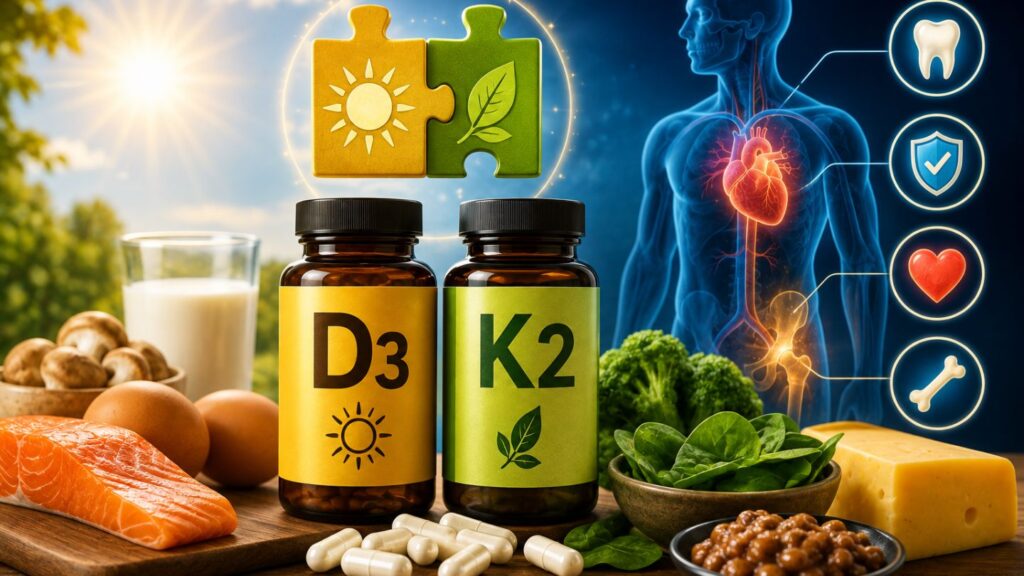
For most adults: 1,000–2,000 IU of Vitamin D3 daily is safe and effective. Severely deficient individuals may need 4,000–10,000 IU under doctor supervision. Always take with vitamin K2 for best absorption.

Frequently Asked Questions

How do I know if I'm vitamin D deficient? +
The only accurate way is a 25-hydroxyvitamin D blood test from your doctor. Normal levels are 20–50 ng/mL. Below 20 ng/mL is considered deficient. If you have multiple symptoms listed above, ask your doctor for this test.
How long does it take to correct vitamin D deficiency? +
With consistent supplementation (2,000 IU/day), most people see levels normalize within 2–3 months. Severe deficiency may take 4–6 months. Symptoms like fatigue and mood often improve within 4–6 weeks of treatment.
Can you take too much vitamin D? +
Yes — vitamin D toxicity is possible but rare. It occurs at very high doses (typically above 10,000 IU/day for extended periods). Symptoms include nausea, weakness, and kidney problems. The NIH safe upper limit is 4,000 IU/day for adults without medical supervision.
What's the best time to take vitamin D supplements? +
Take vitamin D with your largest meal of the day, ideally one containing healthy fats (avocado, nuts, olive oil). Vitamin D is fat-soluble, so fat enhances absorption by up to 50%.
Does vitamin D3 differ from vitamin D2? +
Yes. Vitamin D3 (cholecalciferol) is the form produced by your skin and found in animal products — it raises blood levels more effectively than D2 (ergocalciferol), which comes from plants. Always choose D3 when supplementing.

📚 Sources & References

  1. Holick MF. Vitamin D Deficiency. New England Journal of Medicine. 2007.
  2. National Institutes of Health. Vitamin D — Health Professional Fact Sheet. 2023.
  3. Shaffer JA et al. Vitamin D supplementation for depressive symptoms. Psychosom Med. 2014.
  4. Anglin RES et al. Vitamin D deficiency and depression in adults. British Journal of Psychiatry. 2013.
Share this article:
AS
Ahsan Saeed
SEO Specialist & Health Content Writer

Ahsan is a certified SEO specialist with 5+ years of experience writing science-backed health content. He researches and simplifies complex health topics to help readers make informed wellness decisions.