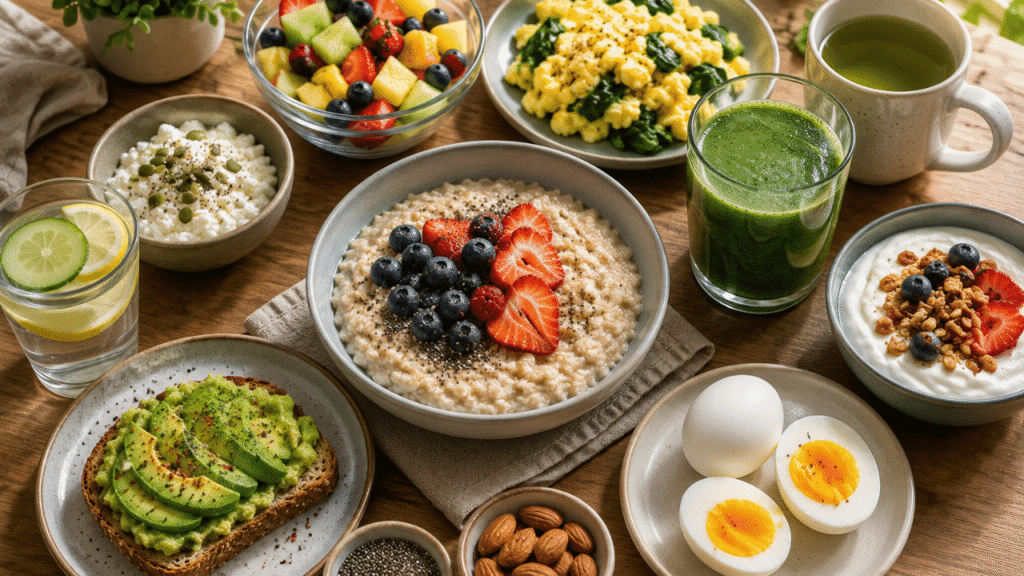
The best breakfast foods for weight loss include eggs, Greek yogurt, oatmeal, berries, chia seeds, cottage cheese, green tea, bananas, avocado, nuts and nut butter, whole grain toast, and protein smoothies. These foods are high in protein and fiber, low in refined carbs, and proven to reduce hunger, boost metabolism, and support fat loss throughout the day.
Introduction
Breakfast has long been called “the most important meal of the day” — but is that actually true for weight loss? And if so, what should you be eating?
The research is more nuanced than the old conventional wisdom. Skipping breakfast entirely works well for some people (particularly those doing intermittent fasting), but for many others, eating a strategic, high-protein breakfast is one of the most powerful tools for weight loss.
Here’s what the science actually shows: what you eat for breakfast has a far greater impact on your weight than whether or not you eat breakfast. A breakfast high in protein and fiber reduces hunger hormones, stabilizes blood sugar, prevents overeating later in the day, and kickstarts your metabolism — while a breakfast high in refined carbs and sugar does the opposite.
This guide covers the 12 best research-backed breakfast foods for weight loss, explains exactly why each one works, and gives you practical ways to incorporate them into your morning routine.
Why Breakfast Matters for Weight Loss
Before the foods, it helps to understand the mechanisms through which breakfast affects weight:
The hunger hormone effect: Ghrelin — the primary hunger hormone — rises overnight during sleep and peaks in the morning. A high-protein breakfast suppresses ghrelin more effectively than a high-carbohydrate breakfast, keeping you fuller for longer.
The thermic effect: Your body burns calories digesting food — a process called the thermic effect of food (TEF). Protein has the highest TEF (20–30%), meaning a protein-rich breakfast burns significantly more calories in digestion than a carb-heavy one.
Blood sugar stabilization: A breakfast high in refined carbs spikes blood glucose rapidly, followed by a crash that triggers cravings for more sugar. A balanced breakfast with protein, fiber, and healthy fat produces a gradual, sustained blood sugar curve — reducing cravings throughout the day.
The “Second Meal Effect”: Research published in the American Journal of Clinical Nutrition found that a high-fiber breakfast reduces blood sugar response not just after breakfast, but after lunch as well — a phenomenon called the “second meal effect.” Your breakfast literally sets your metabolic tone for the entire day.
12 Best Breakfast Foods for Weight Loss
1. Eggs — The Gold Standard of Weight Loss Breakfasts
Eggs are the most researched and most consistently effective breakfast food for weight loss — and the evidence is overwhelming.
Why they work:
- One of the most satiating foods per calorie — high protein (6g per egg) with high bioavailability
- Rich in choline — essential for fat metabolism and liver health
- Contain all 9 essential amino acids — promoting muscle preservation during weight loss
- High thermic effect — your body burns 20–30% of egg calories just digesting them
- Reduce ghrelin (hunger hormone) more than any other breakfast food tested
Research: A landmark study in the International Journal of Obesity found that people who ate eggs for breakfast lost 65% more weight and felt 61% more satisfied compared to those who ate a bagel breakfast with identical calories. Another study found egg breakfasts reduced calorie intake at lunch by 270 calories on average.
Best ways to eat them:
- Scrambled with vegetables (spinach, peppers, mushrooms)
- Poached on whole grain toast with avocado
- Hard boiled (meal prep for the week)
- Omelette with cottage cheese for maximum protein
- Egg muffins — bake in a muffin tin with vegetables for grab-and-go breakfasts
Target: 2–3 eggs per breakfast, providing 12–18g of protein.
2. Greek Yogurt — Protein-Packed Gut Health Powerhouse
Greek yogurt contains nearly double the protein of regular yogurt — making it one of the most efficient breakfast foods for weight loss.
Why it works:
- 15–20g protein per cup — one of the highest protein-to-calorie ratios of any breakfast food
- Contains probiotics that support gut health and reduce inflammation
- High in calcium — research links adequate calcium intake to reduced fat absorption
- Casein protein (slow-digesting) — keeps you full for hours after eating
- Versatile — can be eaten sweet or savory
Research: A study in Appetite found that women who ate high-protein Greek yogurt snacks consumed 100 fewer calories at dinner compared to those who ate low-protein snacks — demonstrating the sustained satiety effect throughout the day.
Important — read labels: Many commercial Greek yogurts are loaded with added sugar (up to 20g per serving). Choose plain, full-fat Greek yogurt and add your own fruit and honey.
Best combinations:
- Greek yogurt + berries + chia seeds + handful of walnuts
- Greek yogurt + banana + almond butter
- Greek yogurt + granola (choose low-sugar) + sliced apple
- Savory: Greek yogurt + cucumber + dill + olive oil (tzatziki-style)
3. Oatmeal — The Fiber Champion
Oatmeal is one of the most filling breakfast foods available — primarily due to its exceptional soluble fiber content.
Why it works:
- Beta-glucan — the primary fiber in oats — forms a thick gel in the digestive tract that dramatically slows digestion and reduces hunger
- Increases the release of PYY — a fullness hormone that reduces appetite for hours
- Stabilizes blood sugar through slow, sustained glucose release
- Contains resistant starch — feeds beneficial gut bacteria and increases fat burning
- Affordable and highly versatile
Research: A study in the Journal of the American College of Nutrition found that oatmeal produced significantly greater satiety and reduced calorie intake at the next meal compared to ready-to-eat cereal — despite equal calorie content. Beta-glucan specifically has been shown to reduce appetite by up to 30%.
Critical warning — avoid instant oatmeal: Instant and flavored oat packets are often loaded with added sugar (up to 13g per packet) and have a higher glycemic index due to processing. Choose rolled oats or steel-cut oats for maximum fiber and satiety.
Best preparation:
- Overnight oats: combine rolled oats, Greek yogurt, chia seeds, milk, and berries — refrigerate overnight
- Savory oats: cook with vegetable broth, top with a poached egg and avocado
- Protein oats: stir in a scoop of protein powder after cooking
- Add cinnamon — research shows cinnamon improves insulin sensitivity
4. Berries — Low-Sugar Antioxidant Powerhouses
Berries are the ideal breakfast fruit for weight loss — low in sugar, high in fiber, and packed with compounds that actively support fat metabolism.
Why they work:
- Low glycemic index — minimal blood sugar impact compared to other fruits
- High in anthocyanins — antioxidants that reduce inflammation and improve fat metabolism
- High fiber content (raspberries: 8g fiber per cup — one of the highest fiber foods available)
- Research shows anthocyanins specifically reduce visceral fat accumulation
- Very low calorie density — you can eat a large volume for few calories
Research: A study in Nutrition, Metabolism and Cardiovascular Diseases found that daily berry consumption significantly reduced visceral fat, improved insulin sensitivity, and lowered blood pressure over 8 weeks.
Best berries for weight loss (ranked by fiber/sugar ratio):
- Raspberries — 8g fiber, 5g sugar per cup
- Blackberries — 7.6g fiber, 7g sugar per cup
- Strawberries — 3g fiber, 7g sugar per cup
- Blueberries — 3.6g fiber, 15g sugar per cup (highest antioxidants)
Best way to eat them: Add to Greek yogurt, oatmeal, or protein smoothies. Frozen berries are equally nutritious and significantly cheaper than fresh.
5. Chia Seeds — Tiny But Extraordinarily Filling
Chia seeds are among the most nutrient-dense foods on the planet — and their unique gel-forming properties make them exceptional for weight loss.
Why they work:
- Absorb up to 10–12x their weight in water — expanding in the stomach and dramatically increasing fullness
- 10g of fiber per 2 tablespoons — primarily soluble fiber that forms a filling gel
- 4g of plant-based protein per 2 tablespoons
- Rich in omega-3 fatty acids — reduce inflammation associated with obesity
- Slow gastric emptying — food stays in your stomach longer, keeping you fuller
Research: A study in the European Journal of Clinical Nutrition found that chia seeds added to breakfast yogurt reduced appetite and food intake at lunch by 25% compared to yogurt without chia seeds.
How to use them:
- Chia pudding: combine 3 tbsp chia seeds with 1 cup milk, refrigerate overnight — top with berries
- Add 2 tbsp to oatmeal or Greek yogurt
- Blend into smoothies (thickens naturally)
- Sprinkle on avocado toast
6. Cottage Cheese — The Underrated Weight Loss Food
Cottage cheese is one of the most protein-dense, low-calorie breakfast foods available — and one of the most underappreciated.
Why it works:
- 25g of protein per cup — one of the highest protein concentrations of any whole food
- Primarily casein protein — extremely slow-digesting, providing sustained satiety for 4–6 hours
- Very low in calories — approximately 200 calories per cup with 25g protein
- High in leucine — the amino acid most responsible for muscle protein synthesis and fat burning
- Research shows it’s as satiating as eggs for breakfast
Research: A study in Appetite found that cottage cheese was equally as satiating as eggs when matched for calories and protein — demonstrating its power as a breakfast food despite being less well-known for this purpose.
Best combinations:
- Cottage cheese + sliced peaches or pineapple + walnuts
- Savory: cottage cheese + cherry tomatoes + cucumber + olive oil + black pepper
- Blend until smooth and use as a high-protein alternative to cream cheese on toast
- Mix into scrambled eggs for extra protein and creaminess
7. Avocado — Healthy Fat That Burns Fat
The paradox of avocado: eating fat helps you lose fat — when it’s the right kind of fat.
Why it works:
- Monounsaturated fatty acids (MUFA) — directly reduce visceral fat accumulation
- Extremely high fiber content (10g per avocado) — one of the highest fiber fruits
- Increases satiety hormones (CCK, PYY, GLP-1) after eating
- Slows gastric emptying — extends feelings of fullness
- Rich in potassium — reduces water retention and bloating
- Reduces LDL cholesterol oxidation — cardiovascular benefit during weight loss
Research: A study in the Journal of Nutrition found that adding avocado to breakfast increased satiety and reduced desire to eat for 3–5 hours after the meal, compared to a breakfast without avocado — even when calories were matched.
Best breakfast uses:
- Avocado toast on whole grain bread + 2 poached eggs + chili flakes
- Sliced avocado with 3 scrambled eggs + salsa
- Blend into a smoothie for creaminess without banana
- Avocado + cottage cheese on rye crispbread
8. Protein Smoothies — Customizable Meal Replacement
A well-constructed protein smoothie can be one of the most effective weight loss breakfasts — combining multiple weight-loss-friendly foods in one convenient meal.
Why they work:
- Highly customizable — easy to hit protein, fiber, and calorie targets precisely
- Fast to prepare — ideal for busy mornings
- Can include multiple weight loss foods simultaneously (berries + spinach + chia + protein)
- Research shows liquid meals with high protein reduce subsequent meal intake
The perfect weight loss smoothie formula:
- Protein base (20–30g): 1 scoop whey/pea protein powder OR 1 cup Greek yogurt OR 1 cup cottage cheese
- Liquid (1 cup): Unsweetened almond milk, oat milk, or water
- Fiber: 1 cup spinach or kale (you won’t taste it) + 1 tbsp chia seeds
- Fruit (low sugar): ½ cup frozen berries OR ½ banana
- Healthy fat: ½ avocado OR 1 tbsp almond butter
- Optional: 1 tsp cinnamon, 1 tsp matcha powder
What to avoid in smoothies:
- Large amounts of fruit juice (liquid sugar)
- Multiple bananas (high sugar)
- Store-bought smoothies — often 400–600 calories of pure sugar
9. Whole Grain Toast — Smart Carbohydrates
Not all carbohydrates are equal — and whole grain toast is one of the few carbohydrate-based breakfast foods with genuine weight loss support.
Why it works:
- High fiber content reduces blood sugar spikes compared to white bread
- Contains resistant starch — feeds gut bacteria and reduces fat absorption
- B vitamins support energy metabolism
- Provides sustained energy without the crash of refined carbs
- The perfect vehicle for protein-rich toppings
Research: A large study following 27,000 men for 8 years found that those who ate the most whole grains had a 17% lower risk of obesity than those eating refined grains — even when controlling for other dietary factors.
Key — read the label: Many “whole wheat” breads are primarily white flour with a small amount of whole grain. Look for “100% whole grain” or “whole wheat flour” as the FIRST ingredient.
Best weight loss toppings:
- 2 eggs + avocado + chili flakes (highest protein + fat combo)
- Almond butter + sliced banana + chia seeds
- Cottage cheese + smoked salmon + capers
- Hummus + sliced cucumber + cherry tomatoes
10. Nuts and Nut Butter — Calorie-Dense but Satiety-Boosting
Nuts seem counterintuitive for weight loss — they’re high in calories and fat. But the research consistently shows they support weight management, not weight gain.
Why they work:
- High protein + fat + fiber combination — the most satiating macronutrient combination
- Research shows approximately 20% of nut calories are not absorbed due to their cellular structure
- Magnesium content — reduces cortisol (the belly fat hormone)
- Omega-3s (especially walnuts) reduce inflammation
- Trigger release of CCK — a fullness hormone
Research: A major review in Obesity Reviews found that people who regularly ate nuts had lower BMI and less abdominal fat than those who avoided nuts — despite nuts being calorie-dense.
Best nuts for weight loss:
- Almonds — highest protein and fiber, most research support
- Walnuts — highest omega-3 content, best for inflammation reduction
- Pistachios — lowest calorie per nut, takes longer to eat (built-in portion control)
Portion control is key: 1 oz (28g) = approximately a small handful. Stick to this — nuts are calorie-dense.
Nut butter: Choose natural nut butter with no added sugar or palm oil. 1–2 tablespoons is an ideal portion.
11. Green Tea — Liquid Fat Burner
While not technically a food, green tea deserves a place in your weight loss breakfast routine for its well-documented effects on metabolism and fat oxidation.
Why it works:
- EGCG (epigallocatechin gallate) — the primary catechin in green tea — inhibits enzymes that break down norepinephrine, increasing fat oxidation
- Caffeine + EGCG work synergistically — more effective together than either alone
- Multiple meta-analyses confirm green tea increases metabolic rate by 3–4%
- Specifically targets visceral (belly) fat according to multiple studies
- Reduces cortisol — lowering stress-related fat storage
Research: A meta-analysis of 11 studies in Obesity Reviews found that green tea catechins plus caffeine significantly reduced body weight, BMI, and waist circumference compared to caffeine alone.
How to maximize the benefit:
- Drink 2–3 cups in the morning
- Brew at 80°C (not boiling — high heat destroys catechins)
- Drink between meals or 30 minutes before breakfast — not with food (tannins inhibit iron absorption)
- Matcha provides the highest concentration of catechins — 10x more than regular green tea
12. Bananas — The Strategic Pre-Workout Breakfast
Bananas are often avoided during weight loss due to their sugar content — but the research suggests they’re actually beneficial when eaten strategically.
Why they work:
- High in resistant starch (especially slightly unripe bananas) — feeds gut bacteria and increases fat burning
- Excellent source of potassium — reduces bloating and water retention
- Natural sugars with fiber — slower blood sugar impact than processed sugars
- Contains dopamine and serotonin precursors — improving mood and reducing emotional eating
- Portable, affordable, and require no preparation
Key — choose slightly unripe bananas: Yellow bananas with green tips have the highest resistant starch content. Fully ripe (spotted) bananas have converted most resistant starch to simple sugars.
Best breakfast use: Pair with protein — banana alone causes a blood sugar spike. Banana + nut butter + Greek yogurt = balanced, weight-loss-friendly breakfast.
The Worst Breakfast Foods for Weight Loss — Avoid These
| Food | Why It Undermines Weight Loss |
|---|---|
| Sugary cereal | High sugar, low protein → hunger within 1–2 hours |
| Flavored instant oatmeal | Up to 13g added sugar per packet |
| Fruit juice | Liquid fructose → visceral fat, no fiber |
| Pastries and muffins | Refined carbs + sugar + fat → massive insulin spike |
| Flavored yogurt | Up to 20g added sugar — more than a candy bar |
| White toast alone | Rapid blood sugar spike, no protein or fiber |
| Granola bars | Marketing as “healthy” — often 20–30g sugar |
| Smoothie from a shop | Average store smoothie = 400–600 calories of sugar |
| Skipping breakfast + coffee | Cortisol spike → muscle breakdown + fat storage |
The Ideal Weight Loss Breakfast Formula
Research-backed breakfast template:
| Component | Target | Examples |
|---|---|---|
| Protein | 25–35g | Eggs, Greek yogurt, cottage cheese, protein powder |
| Fiber | 8–12g | Oats, chia seeds, berries, avocado |
| Healthy fat | 10–15g | Avocado, nuts, eggs, olive oil |
| Complex carbs | 20–30g | Oats, whole grain toast, banana |
| Total calories | 300–450 | Adjust based on your daily target |
The best combinations:
- Option A: 3 scrambled eggs + ½ avocado + 2 slices whole grain toast + berries
- Option B: 1 cup Greek yogurt + ½ cup oats + 1 tbsp chia seeds + ½ cup raspberries
- Option C: Protein smoothie (Greek yogurt + protein powder + spinach + berries + chia)
- Option D: 1 cup cottage cheese + ½ banana + 1 tbsp almond butter + handful of walnuts
Sample Week of Weight Loss Breakfasts
| Day | Breakfast | Approx Protein | Approx Calories |
|---|---|---|---|
| Monday | 3 eggs + avocado toast + berries | 28g | 420 |
| Tuesday | Greek yogurt parfait + chia + raspberries | 22g | 340 |
| Wednesday | Protein smoothie (Greek yogurt + spinach + berries) | 30g | 380 |
| Thursday | Overnight oats + berries + almond butter | 18g | 400 |
| Friday | Cottage cheese + fruit + walnuts | 28g | 360 |
| Saturday | Veggie omelette + whole grain toast + green tea | 32g | 430 |
| Sunday | Chia pudding + berries + eggs on the side | 26g | 390 |
Key Takeaways
- What you eat for breakfast matters more than whether you eat breakfast
- Aim for 25–35g of protein at breakfast — this single change reduces daily calorie intake by 200–400 calories
- Eggs are the most research-backed breakfast food for weight loss
- Fiber (from oats, chia, berries) combined with protein produces the greatest satiety
- Avoid refined carbs, added sugar, and fruit juice at breakfast — these undermine all other efforts
- Green tea in the morning provides genuine metabolic benefits
- The second meal effect: a high-fiber breakfast reduces blood sugar spikes after lunch too
- Consistency matters more than perfection — a good breakfast every day beats a perfect breakfast occasionally
Sources
- Vander Wal JS et al. Egg breakfast enhances weight loss. International Journal of Obesity. 2008.
- Leidy HJ et al. The role of protein in weight loss and maintenance. American Journal of Clinical Nutrition. 2015.
- Rebello CJ et al. Meal planning based on dietary fiber and protein. Journal of the American College of Nutrition. 2014.
- Kristensen M et al. Chia seeds suppress appetite. European Journal of Clinical Nutrition. 2012.
- Wien M et al. Avocado consumption and satiety. Nutrition Journal. 2013.
- Hursel R et al. The effects of green tea on weight loss. Obesity Reviews. 2009.
- Flores-Mateo G et al. Nut intake and adiposity. American Journal of Clinical Nutrition. 2013.
- Slavin J. Fiber and prebiotics: mechanisms and health benefits. Nutrients. 2013.