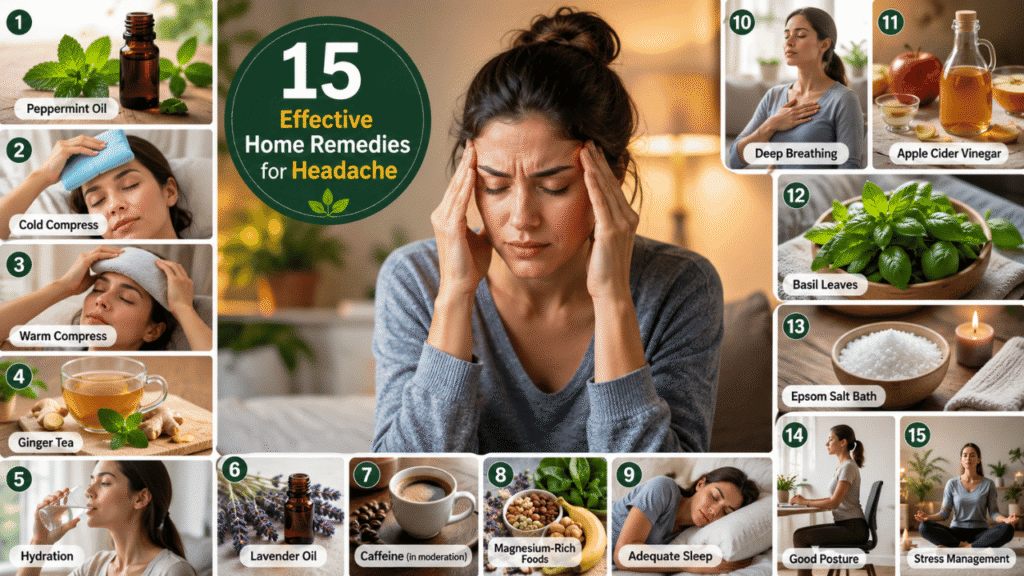
The most effective home remedies for headaches include drinking water immediately, applying a cold or warm compress, massaging pressure points, taking magnesium, drinking ginger tea, using peppermint or lavender essential oil, resting in a dark quiet room, applying a caffeine compress, doing neck stretches, practicing deep breathing, using a cold shower, taking a nap, trying acupressure, eating small meals, and getting fresh air. Most mild-to-moderate headaches resolve within 30–60 minutes with the right remedy.
Introduction
Headaches are one of the most common health complaints worldwide — affecting an estimated 50% of adults at least once per year, with millions experiencing them weekly. Whether it’s a tension headache from hours at a screen, a dehydration headache from not drinking enough water, or the throbbing pain of a migraine — reaching for a painkiller every time isn’t always necessary or ideal.
The good news: many headaches respond remarkably well to simple, evidence-based home remedies — often within 20–30 minutes — without any medication at all.
This guide covers 15 home remedies that are backed by research, ranked from fastest-acting to longer-term preventive strategies, so you can find relief as quickly as possible.
Types of Headaches — Why It Matters
Different headaches respond to different remedies. Knowing your type helps you choose the right approach:
Tension headache (most common — 70% of headaches):
- Feels like a tight band or pressure around the head
- Usually bilateral (both sides)
- Caused by muscle tension, stress, poor posture, screen time
- Best remedies: cold/warm compress, massage, stretching, hydration
Dehydration headache:
- Dull, persistent ache — often worse when moving
- Accompanied by dark urine, dry mouth, fatigue
- Best remedy: water + electrolytes (often resolves in 30 min)
Migraine:
- Moderate to severe throbbing pain, usually one side
- Often with nausea, light/sound sensitivity
- Triggers: hormonal changes, certain foods, bright lights, stress
- Best remedies: dark quiet room, cold compress, magnesium, ginger
Sinus headache:
- Pressure and pain around forehead, cheeks, nose
- Often with nasal congestion, worse in the morning
- Best remedies: steam inhalation, warm compress, hydration
Caffeine headache:
- Occurs 12–24 hours after skipping caffeine
- Throbbing, often with fatigue and irritability
- Best remedy: small amount of caffeine + water
15 Home Remedies for Headache That Actually Work
Remedy #1 — Drink Water Immediately
This is the first thing to do for any headache — because dehydration is one of the most common and overlooked causes.
Why it works: Your brain is approximately 73% water. Even mild dehydration of 1–2% causes the brain to temporarily shrink away from the skull, triggering pain receptors in the meninges (the membranes surrounding the brain).
Research: A study in Cephalalgia found that increasing water intake by 1.5 liters per day significantly reduced headache intensity and duration in people with recurrent headaches.
How to use it:
- Drink 2–3 glasses of water immediately when a headache starts
- Sip slowly over 20–30 minutes rather than gulping
- Add a pinch of salt and squeeze of lemon for electrolytes — especially if you’ve been sweating or exercising
- If your urine is dark yellow, dehydration is very likely the cause
Timeline: Most dehydration headaches resolve within 30–60 minutes of adequate rehydration.
Remedy #2 — Cold Compress (For Throbbing/Migraine Headaches)
A cold compress is one of the fastest and most effective remedies for migraines and throbbing headaches.
Why it works: Cold constricts blood vessels and reduces inflammation, which decreases the pulsating pain of vascular headaches. It also numbs the area and reduces the transmission of pain signals.
Research: A study in Hawaii Medical Journal found that applying a frozen neck wrap at the onset of a migraine significantly reduced headache intensity within 30 minutes.
How to use it:
- Wrap ice cubes or a cold gel pack in a thin cloth (never apply ice directly to skin)
- Apply to the forehead, temples, or back of the neck for 15–20 minutes
- For migraines specifically: apply to the back of the neck (carotid arteries) for maximum effect
- Repeat after a 5-minute break if needed
Best for: Migraines, throbbing headaches, headaches with inflammation.
Remedy #3 — Warm Compress (For Tension Headaches)
While cold works for migraines, warmth is better for tension headaches caused by tight muscles in the neck and shoulders.
Why it works: Heat relaxes tense muscles, improves blood circulation, and reduces the muscle spasms that cause tension-type headaches.
How to use it:
- Warm a damp towel in the microwave for 30 seconds (test temperature first)
- Apply to the back of the neck and shoulders for 15–20 minutes
- A warm shower or bath works equally well — let warm water run over your neck and shoulders
- A heating pad set to low works overnight if muscle tension is chronic
Best for: Tension headaches, neck tension headaches, stress headaches.
Remedy #4 — Pressure Point Massage
Massaging specific pressure points can provide rapid headache relief by releasing muscle tension and improving circulation.
Most effective pressure points:
LI4 (He Gu) — Hand: The fleshy area between your thumb and index finger. Apply firm circular pressure for 2–3 minutes. Proven to reduce headache intensity in multiple clinical studies.
GB20 (Feng Chi) — Base of skull: Two hollow points at the base of the skull, on either side of the spine. Apply firm upward pressure with both thumbs for 2–3 minutes. Highly effective for tension and migraine headaches.
Temples: Circular massage with two fingers on both temples simultaneously. Use medium pressure in slow circles for 2–3 minutes.
Third Eye Point: The point between your eyebrows. Apply gentle downward pressure for 2 minutes. Especially helpful for frontal headaches and sinus pressure.
Research: A systematic review in Cephalalgia found that acupressure (pressure point therapy) significantly reduced headache frequency and intensity compared to sham treatment.
Remedy #5 — Ginger Tea
Ginger is one of the most research-backed natural remedies for both headaches and migraines — and works through multiple mechanisms.
Why it works:
- Inhibits prostaglandin synthesis (the same mechanism as NSAIDs like ibuprofen)
- Blocks serotonin receptors involved in migraine pain
- Reduces nausea associated with migraines
- Has potent anti-inflammatory properties
Research: A study in Phytotherapy Research found that ginger powder was as effective as sumatriptan (a prescription migraine medication) for reducing migraine severity — with fewer side effects.
How to make ginger tea:
- Slice 1–2 inches of fresh ginger root (or use ½ tsp ginger powder)
- Simmer in 2 cups of water for 10 minutes
- Strain and add honey and lemon to taste
- Drink slowly while still warm
Timeline: Most people experience relief within 30–60 minutes.
Remedy #6 — Peppermint Essential Oil
Peppermint oil is one of the most extensively studied essential oils for headache relief — and it works remarkably well for tension headaches.
Why it works: The main active compound, menthol, creates a cooling sensation that activates cold receptors, inhibits serotonin receptors, and blocks calcium channels — reducing headache pain through multiple pathways.
Research: A randomized controlled trial published in Cephalalgia found that topical peppermint oil (10% solution) applied to the forehead and temples was as effective as 1,000mg of acetaminophen (paracetamol) for tension headache relief.
How to use it:
- Dilute 2–3 drops of peppermint essential oil in 1 teaspoon of carrier oil (coconut, almond, or olive oil)
- Apply to temples, forehead, and back of neck
- Massage gently for 2–3 minutes
- Avoid contact with eyes
- Reapply after 30 minutes if needed
⚠️ Caution: Always dilute — never apply undiluted essential oil directly to skin. Not recommended for children under 6.
Remedy #7 — Dark, Quiet Room Rest
This is the most important remedy for migraines specifically — and one of the most consistently effective.
Why it works: During a migraine, the brain becomes hypersensitive to sensory stimuli. Light (photophobia) and sound (phonophobia) trigger additional pain signals. Removing these stimuli allows the nervous system to calm down.
How to use it:
- Find the darkest, quietest room available
- Draw blackout curtains or use a sleep mask
- Use earplugs or noise-cancelling headphones
- Lie down in a comfortable position — many people find lying on their side with a pillow between their knees most comfortable
- Avoid screens completely — the blue light worsens photosensitivity
- Aim for 20–60 minutes of complete rest
Pro tip: Combine with a cold compress on the neck for maximum migraine relief.
Remedy #8 — Small Amount of Caffeine
Caffeine has a paradoxical relationship with headaches — it causes them when you’re dependent and stop suddenly, but it can also relieve them when used strategically.
Why it works: Caffeine constricts blood vessels (reducing the vasodilation that causes throbbing pain) and enhances the effectiveness of pain-relieving compounds. It’s actually included in many over-the-counter headache medications for this reason.
How to use it:
- One cup of black coffee or strong black tea at headache onset
- Works best for caffeine-withdrawal headaches and some tension/vascular headaches
- Combine with water (caffeine is mildly diuretic — dehydration worsens headaches)
⚠️ Important caveat: If you drink caffeine daily and your headache is from caffeine withdrawal, this will work but perpetuates the dependency. Consider gradually reducing caffeine intake to prevent future withdrawal headaches.
Remedy #9 — Neck and Shoulder Stretches
Many tension headaches originate from tight muscles in the neck, shoulders, and upper back — especially for people who sit at desks, use phones, or drive for long periods.
Most effective stretches for headache relief:
Chin tuck: Gently pull chin straight back (creating a “double chin”). Hold 5 seconds, repeat 10 times. Releases suboccipital muscles that compress nerves causing headaches.
Neck side stretch: Tilt head toward right shoulder, hold 20–30 seconds. Then left side. Repeat 3 times each side.
Neck rotation: Slowly rotate head right, hold 15 seconds. Then left. Repeat 3 times.
Shoulder rolls: Roll shoulders backward in large circles, 10 repetitions. Forward, 10 repetitions. Releases trapezius tension.
Upper trap stretch: Sit upright. Place right hand under your seat. Tilt head to the left. Hold 30 seconds each side.
Do this sequence slowly and gently — never force a stretch when in pain.
Remedy #10 — Magnesium Supplementation
Magnesium is the most research-backed supplement for headache prevention — particularly for migraines.
Why it works:
- Magnesium deficiency is found in up to 50% of migraine sufferers
- Magnesium blocks NMDA receptors involved in pain transmission
- Regulates serotonin signaling (a key migraine trigger pathway)
- Reduces cortical spreading depression — the electrical wave that initiates migraines
Research: Multiple randomized controlled trials confirm that magnesium supplementation reduces migraine frequency by 40–50% when taken consistently. The American Academy of Neurology includes magnesium in its evidence-based migraine prevention guidelines.
How to use it:
- For prevention: 400–600mg magnesium glycinate or magnesium citrate daily
- For acute relief: 400mg at headache onset (works best for menstrual migraines)
- Take with food to minimize digestive side effects
- Results for prevention typically seen after 8–12 weeks of consistent use
Remedy #11 — Lavender Essential Oil (Inhaled)
While peppermint works topically, lavender essential oil works best through inhalation for headache and migraine relief.
Why it works: Lavender contains linalool and linalyl acetate — compounds that reduce anxiety, lower cortisol, and have direct analgesic (pain-relieving) effects on the nervous system.
Research: A study in European Neurology found that inhaling lavender essential oil for 15 minutes significantly reduced migraine severity in 92 of 129 patients — compared to 32 of 68 patients in the placebo group.
How to use it:
- Add 2–4 drops to a bowl of hot water and inhale the steam for 5–10 minutes
- Apply 1–2 drops to a tissue and inhale deeply for 5 minutes
- Use in an essential oil diffuser in your room
- Add a few drops to a warm bath for combined hydration + inhalation benefits
Remedy #12 — Steam Inhalation (For Sinus Headaches)
For headaches caused by sinus congestion and pressure, steam inhalation is one of the most effective and immediate remedies.
Why it works: Steam moistens and thins mucus in the sinuses, reduces inflammation of nasal passages, and promotes drainage — directly addressing the source of sinus pressure headaches.
How to use it:
- Boil water and pour into a large bowl
- Add 2–3 drops eucalyptus essential oil (optional but enhances effectiveness)
- Lean over the bowl, cover your head with a towel
- Inhale deeply through your nose for 5–10 minutes
- Repeat 2–3 times per day during a sinus headache
Enhanced version: Combine with a neti pot saline rinse to clear sinuses more thoroughly.
Remedy #13 — Acupressure with Tennis Ball
This is a particularly effective technique for headaches caused by tight muscles at the base of the skull.
Why it works: The suboccipital muscles at the base of the skull are a primary source of tension headaches. Direct sustained pressure releases trigger points (tight knots) in these muscles, providing rapid relief.
How to use it:
- Place two tennis balls in a sock tied at the end
- Lie on your back on a firm surface
- Place the sock under the base of your skull (where head meets neck)
- Rest with the balls pressing on either side of the spine for 5–10 minutes
- Allow gravity to do the work — don’t press down actively
- You may feel significant pressure release and almost immediate headache relief
Remedy #14 — Eat Something Small (Blood Sugar Headaches)
Skipping meals or going too long between meals causes blood sugar to drop — triggering a headache as the brain (which runs exclusively on glucose) signals its need for fuel.
Signs your headache is blood sugar related:
- Headache worsens when you haven’t eaten for 4+ hours
- Accompanied by shakiness, irritability, or difficulty concentrating
- Relieved quickly by eating
Best foods for quick headache relief from low blood sugar:
- A small banana with almond butter
- Handful of nuts and a piece of fruit
- Greek yogurt with honey
- Whole grain crackers with cheese
- A small bowl of oats
What NOT to eat: Candy, chocolate, or sugary drinks — these spike blood sugar rapidly then cause it to crash again, potentially worsening the headache within an hour.
Remedy #15 — Fresh Air and Light Movement
Stuffy, oxygen-poor indoor air is a surprisingly common headache trigger — and getting outside for fresh air and gentle movement can provide rapid relief.
Why it works:
- Fresh outdoor air contains higher oxygen levels and negative ions that improve brain oxygenation
- Gentle movement increases blood flow and releases endorphins (natural pain relievers)
- Natural light (not direct sun) helps regulate circadian rhythms disrupted by indoor lighting
- Being outdoors reduces cortisol and activates the parasympathetic nervous system
How to use it:
- Step outside for 15–20 minutes at headache onset
- Walk at a gentle pace — not vigorous exercise, which can worsen some headaches
- Breathe slowly and deeply
- Avoid bright direct sunlight if you have a migraine — sunglasses recommended
When to See a Doctor — Red Flag Headache Symptoms
Home remedies are appropriate for mild-to-moderate headaches. Seek immediate medical attention if:
- ⚠️ “Thunderclap headache” — sudden, severe headache described as the worst of your life (can indicate brain aneurysm)
- ⚠️ Headache with fever, stiff neck, confusion, or rash (possible meningitis)
- ⚠️ Headache after a head injury or fall
- ⚠️ Headache with vision changes, slurred speech, weakness, or numbness (possible stroke)
- ⚠️ Progressive headaches that worsen over days or weeks
- ⚠️ Headaches that wake you from sleep
- ⚠️ New severe headache after age 50
Headache Prevention — Long-Term Strategies
The best headache treatment is prevention. These strategies reduce frequency:
| Strategy | How It Helps |
|---|---|
| Stay hydrated | Prevents dehydration headaches |
| Regular sleep schedule | Prevents sleep-disruption headaches |
| Stress management | Reduces tension headaches |
| Magnesium 400mg daily | Reduces migraine frequency 40–50% |
| Regular meals | Prevents blood sugar headaches |
| Limit caffeine | Prevents withdrawal headaches |
| Screen breaks (20-20-20 rule) | Reduces eye strain headaches |
| Posture correction | Prevents cervicogenic headaches |
Quick Reference — Which Remedy for Which Headache
| Headache Type | Best Remedy |
|---|---|
| Dehydration | Water + electrolytes (Remedy #1) |
| Tension | Warm compress + neck stretches + pressure points |
| Migraine | Cold compress + dark room + ginger tea + magnesium |
| Sinus | Steam inhalation + warm compress + hydration |
| Caffeine withdrawal | Small coffee + water |
| Blood sugar | Small balanced snack |
| Stress headache | Breathing + lavender + pressure points |
Sources
- Spigt M et al. A randomized trial on the effects of regular water intake in patients with recurrent headaches. Family Practice. 2012.
- Gobel H et al. Effectiveness of peppermint and eucalyptus oil preparations in tension-type headache. Cephalalgia. 1994.
- Maghbooli M et al. Comparison of ginger with sumatriptan in the ablative treatment of the common migraine. Phytotherapy Research. 2014.
- Sasannejad P et al. Lavender essential oil in the treatment of migraine headache. European Neurology. 2012.
- Peikert A et al. Prophylaxis of migraine with oral magnesium. Cephalalgia. 1996.
- Facchinetti F et al. Magnesium prophylaxis of menstrual migraine. Headache. 1991.
- Melchart D et al. Acupuncture in patients with tension-type headache. British Medical Journal. 2005.