Quick Answer
The most effective science-backed ways to reduce belly fat naturally without a gym include eating a high-protein diet, cutting added sugar and refined carbs, getting 7–9 hours of sleep, managing stress, drinking more water, walking daily, doing bodyweight exercises at home, eating more fiber, avoiding liquid calories, practicing intermittent fasting, reducing alcohol, adding apple cider vinegar, and eating anti-inflammatory foods. Consistency over 8–12 weeks produces visible results.
Introduction
Belly fat is one of the most stubborn and — more importantly — one of the most dangerous types of fat on the human body. Unlike the fat you can pinch under your skin (subcutaneous fat), the deep belly fat known as visceral fat wraps around your internal organs and actively contributes to heart disease, type 2 diabetes, insulin resistance, and chronic inflammation.
The good news? You don’t need a gym membership, expensive equipment, or hours of daily exercise to reduce it. In fact, research consistently shows that diet, sleep, stress management, and daily movement have a far greater impact on belly fat than any gym workout.
This guide covers 13 evidence-based strategies ranked by impact — so you know exactly where to focus your energy for the fastest results.
What Causes Belly Fat? Understanding the Root Problem
Before the solutions, understanding the causes helps you target the right levers:
Hormonal factors:
- Cortisol (stress hormone) — directly stimulates visceral fat storage, especially in the abdominal area
- Insulin resistance — when cells stop responding to insulin, excess glucose is stored as belly fat
- Low estrogen (in women after menopause) — shifts fat storage from hips to abdomen
- Low testosterone (in men) — associated with increased visceral fat
Lifestyle factors:
- Excess added sugar and refined carbohydrates
- Poor sleep (even one week of sleep deprivation increases belly fat)
- Chronic stress
- Excessive alcohol — “beer belly” is real; alcohol is preferentially stored as abdominal fat
- Sedentary behavior — sitting 8+ hours per day, regardless of exercise
The key insight: Belly fat is primarily a metabolic and hormonal problem — not just a calories-in/calories-out equation. This is why strategies that address hormones, inflammation, and insulin sensitivity work better than simple calorie restriction alone.
13 Science-Backed Ways to Reduce Belly Fat Without the Gym
1. Eat More Protein — The Single Most Powerful Dietary Change
If you make only one dietary change, make it this: eat more protein.
Why it works for belly fat specifically:
- Protein reduces levels of the hunger hormone ghrelin and increases satiety hormones (PYY, GLP-1)
- It has the highest thermic effect of any macronutrient — 20–30% of calories burned just digesting it
- Protein preserves muscle mass during fat loss, preventing the metabolic slowdown that causes fat regain
- Multiple studies directly link higher protein intake to reduced abdominal fat — independent of total calories
Research: A study in the American Journal of Clinical Nutrition found that increasing protein to 25–30% of calories reduced abdominal fat significantly compared to standard protein intake — even without calorie restriction.
Best protein sources:
- Eggs (the most complete and bioavailable protein)
- Greek yogurt and cottage cheese
- Chicken breast, turkey, lean beef
- Salmon and fatty fish (also reduce inflammation)
- Legumes: lentils, chickpeas, black beans
- Tofu and tempeh
Target: 1.6–2.2g of protein per kg of body weight per day. For a 70kg person: 112–154g daily.
2. Eliminate Added Sugar and Sugary Drinks
Added sugar — particularly fructose — is metabolized almost exclusively in the liver. When you consume excess fructose, the liver converts it directly to fat, with a preference for visceral/abdominal fat storage.
The liquid sugar problem: Liquid calories from soda, juice, energy drinks, and sweetened coffee don’t trigger the same satiety signals as solid food. Studies show people don’t compensate for liquid calories by eating less — they simply consume more total calories.
Research: A study at UC Davis found that people who consumed fructose-sweetened beverages for 10 weeks gained significantly more visceral fat than those who consumed glucose-sweetened beverages — even with identical calorie intake.
What to cut:
- Soda and fizzy drinks (even diet soda — artificial sweeteners affect gut bacteria and insulin)
- Fruit juices (even “natural” — liquid fructose behaves the same as added sugar)
- Sports and energy drinks
- Sweetened coffee and tea drinks
- Processed snacks with hidden sugar (sauces, cereals, flavored yogurt)
What to drink instead: Water, sparkling water, plain coffee and tea, herbal teas.
3. Cut Refined Carbohydrates — Replace With Whole Food Carbs
Refined carbohydrates (white bread, white rice, pasta, pastries, crackers) spike blood sugar and insulin rapidly. Chronically elevated insulin is one of the primary drivers of visceral fat accumulation.
The research is clear: Low-carbohydrate diets consistently produce greater reductions in belly fat compared to low-fat diets — even when calories are equal.
What to replace refined carbs with:
- White rice → brown rice, quinoa, barley
- White bread → whole grain bread (check labels — must say “whole grain” as first ingredient)
- Pasta → whole wheat pasta, legume pasta, or zucchini noodles
- Crackers → oat cakes, rice cakes, raw vegetables
- Sugary breakfast cereal → oats, eggs, Greek yogurt
Note: You don’t need to go zero-carb. Simply replacing refined carbs with whole food alternatives significantly improves insulin sensitivity and reduces belly fat over 8–12 weeks.
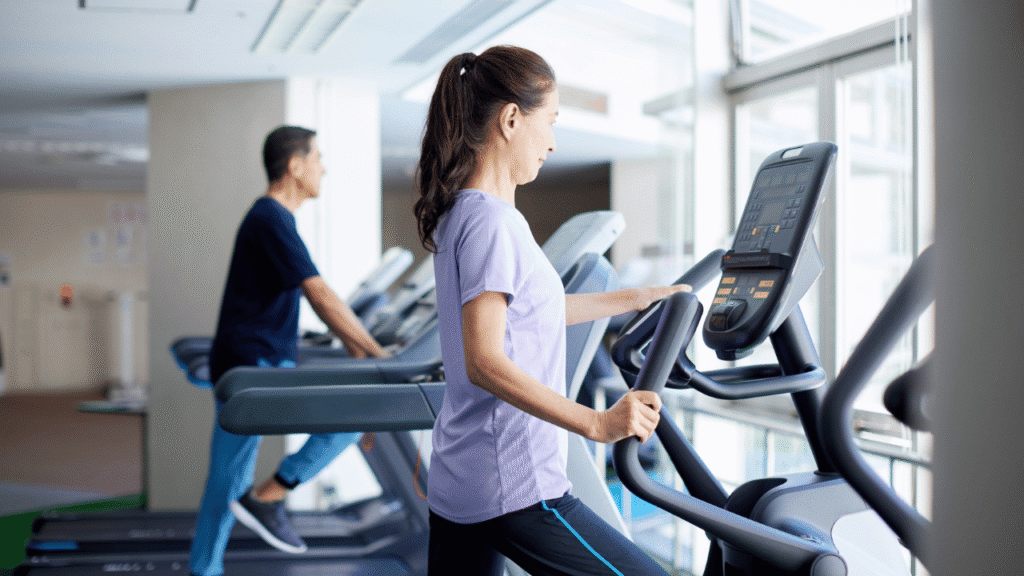
4. Walk More — The Most Underrated Belly Fat Strategy
Walking is one of the most evidence-backed strategies for reducing visceral fat — and requires zero equipment or gym membership.
Why walking targets belly fat specifically:
- Walking at moderate intensity (brisk walking) preferentially burns visceral fat over subcutaneous fat
- It reduces cortisol (stress-related belly fat accumulation)
- Improves insulin sensitivity
- Can be sustained consistently — unlike intense exercise
How to maximize walking for belly fat:
- Aim for 8,000–10,000 steps per day — this is the evidence-backed sweet spot
- Brisk walking (fast enough that you can talk but not sing) burns significantly more fat than slow strolling
- Post-meal walks of even 10–15 minutes significantly improve blood sugar response and reduce fat storage
- Use a pedometer or your phone’s step counter to track progress
- Replace short car trips with walking
- Take stairs instead of elevators every time
The 10-minute rule: Can’t find time for a long walk? Three 10-minute brisk walks throughout the day produce similar metabolic benefits to one 30-minute walk.
5. Do These Home Bodyweight Exercises — No Equipment Needed
You don’t need a gym to build the muscle that burns belly fat. These bodyweight exercises build core strength and boost metabolism:
Best belly-fat-burning home exercises:
Plank (isometric core):
- Start: 3 sets of 20–30 seconds
- Build to: 3 sets of 60+ seconds
- Engages the entire core without crunches
Mountain Climbers:
- 3 sets of 30 seconds
- Elevates heart rate while targeting core
Burpees:
- 3 sets of 10 reps
- Full-body exercise with high calorie burn
Bodyweight Squats:
- 3 sets of 20 reps
- Builds the largest muscle groups — maximizes fat burning
High Knees:
- 3 sets of 30 seconds
- Cardio + core engagement
Sample 20-minute home workout (no equipment):
- Warm up: March in place 3 min
- Squats: 3×20
- Plank: 3×45 sec
- Mountain climbers: 3×30 sec
- Push-ups: 3×10–15
- High knees: 3×30 sec
- Burpees: 3×10
- Cool down: Stretch 3 min
Do this 3–4 times per week alongside daily walking for optimal results.
6. Sleep 7–9 Hours Every Night
Poor sleep is one of the most direct and underappreciated causes of belly fat — and fixing it is one of the fastest ways to see results.
The science: A landmark study in Annals of Internal Medicine found that sleeping only 5.5 hours per night vs 8.5 hours — with identical diets — reduced fat loss by 55% and increased muscle loss. The sleep-deprived group also lost significantly less visceral fat.
Why sleep deprivation causes belly fat:
- Ghrelin (hunger hormone) increases — you feel hungrier
- Leptin (fullness hormone) decreases — you feel less satisfied
- Cortisol rises — directly stimulates visceral fat storage
- Insulin sensitivity drops — more glucose stored as fat
- Cravings for high-sugar, high-fat foods intensify (the brain seeks quick energy)
Sleep optimization for belly fat reduction:
- Consistent sleep/wake schedule — even on weekends
- Dark, cool bedroom (16–19°C)
- No screens 60 minutes before bed
- Cut caffeine by 2 PM
- Magnesium glycinate (200–400mg) before bed — reduces cortisol and improves sleep quality
7. Manage Stress — Attack Cortisol Directly
Cortisol is the belly fat hormone. When you’re chronically stressed, cortisol drives fat storage specifically in the visceral/abdominal area — it’s an evolutionary survival mechanism designed to store energy near your vital organs during times of threat.
The problem: Your body can’t distinguish between a real physical threat and the stress of deadlines, financial worries, or relationship problems. All of it triggers the same cortisol response.
Evidence-based stress reduction for belly fat:
Deep breathing — 4-7-8 technique: Activates the parasympathetic nervous system within minutes, dropping cortisol. Inhale 4 counts, hold 7, exhale 8. Do this 4 cycles, twice daily.
Spending time in nature: Even 20 minutes outdoors significantly reduces cortisol. A 2019 study in Frontiers in Psychology found that just sitting in a natural environment reduced cortisol by 21%.
Social connection: Loneliness elevates cortisol. Regular positive social interaction is a genuine belly-fat-fighting tool.
8. Drink More Water — Especially Before Meals
Water is one of the most effective and free belly fat reduction tools available.
How water reduces belly fat:
- Increases metabolic rate by 24–30% for 60–90 minutes after drinking 500ml
- Reduces appetite when consumed before meals
- Replaces caloric beverages (the average person drinks 300–500 liquid calories daily)
- Supports fat metabolism (lipolysis requires water)
- Reduces water retention and bloating
Research: A 12-week study found that drinking 500ml of water 30 minutes before each meal produced 44% greater weight loss than dieting without pre-meal water consumption.
Practical tips:
- Drink 500ml upon waking (before coffee)
- 500ml 30 minutes before each meal
- Keep a water bottle visible at all times
- Aim for 2.5–3 liters total daily
9. Try Intermittent Fasting — 16:8 Protocol
Intermittent fasting (IF) is one of the most researched dietary strategies for specifically targeting visceral fat.
The 16:8 protocol: Eat within an 8-hour window, fast for 16 hours. Example: eat between 12 PM and 8 PM, fast from 8 PM to 12 PM the next day.
Why IF targets belly fat:
- Reduces insulin levels significantly during the fasting window
- Increases norepinephrine, which drives fat breakdown
- Growth hormone increases up to 5-fold during fasting, preserving muscle and accelerating fat loss
- Naturally reduces overall calorie intake without counting
Research: A review in Nutrition Reviews found that intermittent fasting reduced visceral fat by 4–7% over 6–24 weeks — comparable to continuous calorie restriction but with better adherence.
How to start:
- Week 1: 12:12 (12 hours eating, 12 hours fasting — essentially skipping late snacks)
- Week 2–3: 14:10
- Week 4+: 16:8
10. Eat More Soluble Fiber
Soluble fiber forms a thick gel in your digestive tract that slows digestion, reduces appetite, and directly targets visceral fat.
The research: A major study following 1,114 adults over 5 years found that every 10-gram increase in soluble fiber intake was associated with a 3.7% reduction in visceral fat — independent of other dietary factors and exercise.
Best sources of soluble fiber:
- Oats and oat bran (highest concentration)
- Flaxseeds (add to yogurt, smoothies, oatmeal)
- Legumes: lentils, chickpeas, kidney beans
- Brussels sprouts, sweet potatoes, avocado
- Apples, pears, oranges (with the skin)
- Psyllium husk (supplement — highly effective)
Target: 25–35g total fiber per day, with at least 10–15g soluble fiber.
11. Reduce Alcohol — Especially Beer and Cocktails
“Beer belly” is not a myth. Alcohol is processed by the liver as a toxin — it takes priority over fat metabolism. While your liver is processing alcohol, fat burning essentially stops.
How alcohol specifically causes belly fat:
- Provides 7 calories per gram — nearly as much as fat (9 cal/g)
- Stimulates appetite and reduces willpower, leading to overeating
- Disrupts sleep quality, increasing cortisol
- Beer contains phytoestrogens that affect hormone balance
- The body preferentially stores alcohol-related calories as visceral fat
The data: Each additional alcoholic drink per day is associated with approximately 5% increase in visceral fat, according to research in Obesity.
Practical approach:
- Reduce to 1–2 drinks maximum, 2–3 times per week
- Avoid beer and sugary cocktails — opt for dry wine or spirits with water
- Never drink on an empty stomach
- Replace evening alcohol with sparkling water + lime
12. Eat Anti-Inflammatory Foods Daily
Chronic inflammation and belly fat have a bidirectional relationship — visceral fat produces inflammatory compounds, and inflammation drives more fat storage. Breaking this cycle requires an anti-inflammatory diet.
Top anti-inflammatory foods for belly fat:
Fatty fish (salmon, mackerel, sardines): Omega-3 fatty acids directly reduce visceral fat inflammation. Aim for 2–3 servings per week.
Extra virgin olive oil: Contains oleocanthal — a compound with anti-inflammatory effects comparable to low-dose ibuprofen. Use as your primary cooking oil.
Berries (blueberries, strawberries, raspberries): High in anthocyanins — powerful antioxidants that reduce inflammatory markers. One cup daily produces measurable results.
Turmeric + black pepper: Curcumin in turmeric is one of the most studied anti-inflammatory compounds. Black pepper increases absorption by 2,000%. Add to curries, smoothies, golden milk.
Green tea: EGCG catechins reduce inflammation and have been shown in multiple studies to specifically target visceral fat. 3–5 cups daily.
Dark leafy greens: Spinach, kale, arugula — high in magnesium, which reduces cortisol, and antioxidants that combat inflammation.
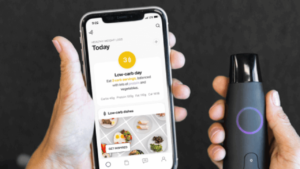
13. Track What You Eat for 2 Weeks
Most people significantly underestimate how much they eat — studies show the average person underestimates calorie intake by 20–40%.
Why tracking works:
- Creates awareness of hidden calories (sauces, oils, snacks)
- Identifies which foods trigger cravings and overeating
- Shows protein, fiber, and sugar intake clearly
- Research shows people who track food lose 2–3x more weight than those who don’t
Free tools:
- MyFitnessPal — largest food database, easy to use
- Cronometer — more detailed micronutrient tracking
- Lose It! — simple, beginner-friendly
You don’t need to track forever. Just 2 weeks of honest tracking creates lasting awareness of your eating patterns — even after you stop tracking.
How Long Does It Take to Lose Belly Fat?
Realistic timeline:
| Timeframe | Expected Result |
|---|---|
| Week 1–2 | Reduced bloating, less water retention — clothes feel looser |
| Week 3–4 | Visible reduction begins, 1–2 cm off waist |
| Month 2 | 2–4 cm waist reduction, energy improvement |
| Month 3 | Significant visible change, 5–8 cm possible |
| Month 4–6 | Major transformation with consistent habits |
Important: Spot reduction (losing fat from one specific area) is a myth. You cannot target belly fat exclusively — your body loses fat systematically. However, visceral fat is often the first type of fat lost when you improve diet, sleep, and stress — because it’s the most metabolically active.
Foods That Fight Belly Fat
| Food | Why It Helps |
|---|---|
| Eggs | High protein, reduces hunger, boosts metabolism |
| Salmon | Omega-3s reduce visceral inflammation |
| Oats | Soluble fiber, stabilizes blood sugar |
| Avocado | Healthy fats, fiber, reduces belly fat hormones |
| Greek yogurt | Protein + probiotics improve gut health |
| Green tea | EGCG targets visceral fat |
| Blueberries | Anti-inflammatory, reduces cortisol |
| Legumes | Fiber + protein, improves insulin sensitivity |
| Olive oil | Anti-inflammatory, satisfying |
| Chili peppers | Capsaicin boosts metabolism |
Foods That Increase Belly Fat — Avoid These
| Food | Why It’s Harmful |
|---|---|
| Soda and juice | Liquid fructose → direct visceral fat |
| White bread/rice | Blood sugar spikes → insulin → fat storage |
| Margarine/trans fats | Directly linked to visceral fat gain |
| Alcohol (especially beer) | Stops fat burning, stored as abdominal fat |
| Fast food | Trans fats + refined carbs + sodium |
| Flavored yogurt | Hidden sugar — up to 20g per serving |
| Breakfast cereals | Marketing as “healthy” — often high sugar |
| Fruit juice | Same sugar hit as soda without fiber |
7-Day Belly Fat Reduction Plan
| Day | Focus |
|---|---|
| Monday | High-protein breakfast + 10,000 steps |
| Tuesday | Cut all sugary drinks + 20-min home workout |
| Wednesday | Soluble fiber focus + post-meal walk |
| Thursday | 16-hour fast + stress management (meditation) |
| Friday | Home workout + anti-inflammatory dinner |
| Saturday | Long walk (60 min) + meal prep for week |
| Sunday | Sleep optimization + plan next week |
Key Takeaways
- Belly fat is primarily a hormonal and metabolic problem — not just calories
- Diet is responsible for 80% of belly fat results — exercise supports but doesn’t replace dietary changes
- Protein, fiber, and cutting added sugar are the three most impactful dietary changes
- Sleep deprivation directly causes belly fat accumulation — 7–9 hours is non-negotiable
- Cortisol (from chronic stress) is the primary belly fat hormone — stress management is essential
- Walking 8,000–10,000 steps daily is more effective for visceral fat than occasional intense workouts
- Results are visible in 4–8 weeks with consistent habits — patience is required
- There is no quick fix — but there is a proven, sustainable path
Sources
- Hairston KG et al. Lifestyle factors and 5-year abdominal fat accumulation. Obesity. 2012.
- Nedeltcheva AV et al. Insufficient sleep undermines dietary efforts to reduce adiposity. Annals of Internal Medicine. 2010.
- Halton TL, Hu FB. The effects of high protein diets on thermogenesis, satiety and weight loss. Journal of the American College of Nutrition. 2004.
- Stanhope KL et al. Consuming fructose-sweetened beverages increases visceral adiposity. Journal of Clinical Investigation. 2009.
- Hairston KG et al. Dietary fiber and adiposity. Obesity. 2012.
- Drapeau V et al. Modifications in food-group consumption are related to long-term body-weight changes. American Journal of Clinical Nutrition. 2004.
- Boschmann M et al. Water-induced thermogenesis. Journal of Clinical Endocrinology & Metabolism. 2003.