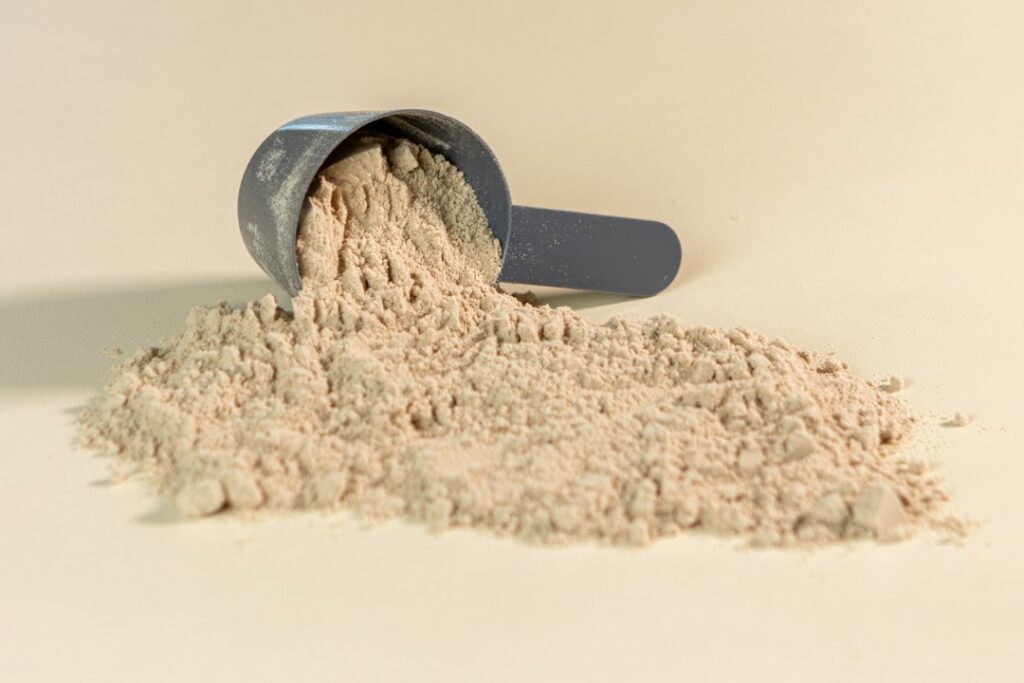
Collagen supplements have moved from wellness trend to a category with genuine meta-analysis evidence behind it — but the picture is more specific and more qualified than the marketing suggests. A 2026 meta-analysis covering 113 clinical trials and 16 systematic reviews with approximately 8,000 participants found that hydrolysed collagen peptides improved muscle strength and reduced osteoarthritis pain by approximately 15 percent versus placebo. Benefits were strongest at daily doses of 10 g or more for at least three months. A separate 2025 analysis of 23 RCTs found significant improvements in skin hydration, elasticity and wrinkles — but independent studies (those not funded by the supplement industry) showed no significant effect. Here is the honest evidence summary.
Key Takeaways
- A 2026 meta-analysis of 113 trials found hydrolysed collagen improved muscle strength and reduced osteoarthritis pain by ~15% at doses of ≥10 g/day for ≥3 months.
- A 2023 meta-analysis of 14 studies (967 participants) found that 12 weeks of hydrolysed collagen significantly improved skin hydration and elasticity.
- A 2025 analysis found that when studies with industry funding were excluded, skin benefits from collagen supplements were no longer statistically significant — a critical caveat.
- Hydrolysed collagen peptides are absorbed as bioactive dipeptides and tripeptides that reach the dermis and stimulate fibroblast collagen synthesis — the mechanism is real and well-documented.
- Collagen supplements do not directly target specific tissues — they provide amino acid building blocks and signalling peptides that the body uses where most needed.
- Always combine collagen supplementation with adequate vitamin C, which is required for the enzymes that stabilise new collagen fibres.
What Are Collagen Supplements?
Collagen is the most abundant protein in the human body — it forms the structural scaffold of skin (primarily types I and III), cartilage (type II), tendons, ligaments, bone and blood vessel walls. Production peaks in the mid-20s and declines by roughly 1 percent per year thereafter. By the mid-40s, cumulative loss is measurable in skin laxity and cartilage vulnerability.
Collagen supplements come in three main forms:
- Hydrolysed collagen peptides (collagen hydrolysate): the most common and most studied form — collagen broken into small, soluble dipeptides and tripeptides by enzymatic hydrolysis. Absorbs readily from the gut.
- Undenatured type II collagen (UC-II): used at much lower doses (10 to 40 mg per day) and works through immune-mediated oral tolerance mechanisms rather than supplying amino acids. Primarily studied for joints.
- Gelatin: partially hydrolysed collagen, less bioavailable than fully hydrolysed peptides, limited clinical data.
%3C/text%3E%3Crect x='30' y='55' width='700' height='44' rx='8' fill='%231B2A4A'/%3E%3Ctext x='200' y='82' font-family='Arial,sans-serif' font-size='13' font-weight='bold' fill='%23ffffff' text-anchor='middle'%3EOutcome%3C/text%3E%3Ctext x='430' y='82' font-family='Arial,sans-serif' font-size='13' font-weight='bold' fill='%23ffffff' text-anchor='middle'%3EEvidence%3C/text%3E%3Ctext x='640' y='82' font-family='Arial,sans-serif' font-size='13' font-weight='bold' fill='%23ffffff' text-anchor='middle'%3EKey Caveat%3C/text%3E%3Crect x='30' y='103' width='700' height='40' rx='4' fill='%23cfeaf7'/%3E%3Ctext x='200' y='128' font-family='Arial,sans-serif' font-size='12' fill='%231f2933' text-anchor='middle'%3ESkin hydration and elasticity%3C/text%3E%3Ctext x='430' y='121' font-family='Arial,sans-serif' font-size='12' font-weight='bold' fill='%2316A34A' text-anchor='middle'%3EStrong in funded%3C/text%3E%3Ctext x='430' y='137' font-family='Arial,sans-serif' font-size='12' fill='%2352606d' text-anchor='middle'%3Estudies%3C/text%3E%3Ctext x='640' y='128' font-family='Arial,sans-serif' font-size='12' fill='%231f2933' text-anchor='middle'%3EFails in independent trials%3C/text%3E%3Crect x='30' y='147' width='700' height='40' rx='4' fill='%23f8fafc'/%3E%3Ctext x='200' y='172' font-family='Arial,sans-serif' font-size='12' fill='%231f2933' text-anchor='middle'%3EOsteoarthritis pain relief%3C/text%3E%3Ctext x='430' y='172' font-family='Arial,sans-serif' font-size='12' font-weight='bold' fill='%2316A34A' text-anchor='middle'%3EModerate-strong%3C/text%3E%3Ctext x='640' y='172' font-family='Arial,sans-serif' font-size='12' fill='%231f2933' text-anchor='middle'%3E≥10g/day, ≥3 months needed%3C/text%3E%3Crect x='30' y='191' width='700' height='40' rx='4' fill='%23cfeaf7'/%3E%3Ctext x='200' y='216' font-family='Arial,sans-serif' font-size='12' fill='%231f2933' text-anchor='middle'%3EMuscle strength%3C/text%3E%3Ctext x='430' y='216' font-family='Arial,sans-serif' font-size='12' font-weight='bold' fill='%23D97706' text-anchor='middle'%3EModerate%3C/text%3E%3Ctext x='640' y='216' font-family='Arial,sans-serif' font-size='12' fill='%231f2933' text-anchor='middle'%3EBest with resistance training%3C/text%3E%3Crect x='30' y='235' width='700' height='40' rx='4' fill='%23f8fafc'/%3E%3Ctext x='200' y='260' font-family='Arial,sans-serif' font-size='12' fill='%231f2933' text-anchor='middle'%3EWrinkle reduction%3C/text%3E%3Ctext x='430' y='260' font-family='Arial,sans-serif' font-size='12' font-weight='bold' fill='%23D97706' text-anchor='middle'%3EModest%3C/text%3E%3Ctext x='640' y='260' font-family='Arial,sans-serif' font-size='12' fill='%231f2933' text-anchor='middle'%3ESkin roughness unchanged%3C/text%3E%3C/svg%3E)
How Collagen Supplements Work — The Mechanism
Sceptics have argued that collagen supplements are just protein — the amino acids from collagen are the same as those from chicken or eggs, and the body cannot direct them specifically to skin or joints. The research has challenged this assumption. A 2024 pharmacokinetic study in Frontiers in Nutrition confirmed that after oral ingestion of hydrolysed collagen, specific bioactive dipeptides (particularly Pro-Hyp and Hyp-Gly) are detectable in the bloodstream and in the dermis. These dipeptides directly stimulate fibroblast activity — increasing collagen synthesis, hyaluronic acid production and elastin production. This is a mechanism distinct from simply supplying amino acids.
The bioactive peptide mechanism explains why not all protein sources produce the same skin and joint effects as hydrolysed collagen peptides — the specific peptide structure matters, not just the amino acid profile.
Skin Health: Real but Funding-Sensitive Evidence
A 2023 meta-analysis of 14 randomised controlled trials and 967 participants in Cureus found that 12 weeks of hydrolysed collagen supplementation significantly improved skin hydration and elasticity compared to placebo — a consistent finding across included studies. The 2026 113-trial meta-analysis confirmed skin hydration and firmness improvements at standard doses.
The funding caveat is important. A 2024 analysis of 23 RCTs found that when studies with pharmaceutical or supplement industry funding were separated from independently funded studies, the industry-funded studies showed significant improvements in hydration, elasticity and wrinkles, while the independently funded studies found no significant effect. This is a substantial concern and means the skin evidence, while plausible in mechanism, is not as clean as it appears in pooled analyses that include industry studies.
Vitamin C is a necessary cofactor for the collagen-synthesis enzymes that new collagen peptide supplementation triggers. Taking collagen supplements without adequate vitamin C limits the benefit — see our guide on vitamin C and collagen for the science behind this.
Joint Health: Strongest Independent Evidence
The joint evidence for hydrolysed collagen is the most consistent and best supported by independent research. The 2026 meta-analysis found approximately 15 percent reductions in osteoarthritis pain scores versus placebo. A 2025 updated systematic review in Clinical and Experimental Rheumatology by Simental-Mendía confirmed clinically meaningful pain and function improvements in knee osteoarthritis with hydrolysed collagen supplementation over 12 to 24 weeks.
Undenatured type II collagen (UC-II) works through a different mechanism — oral tolerance — and has been shown in several trials to be effective at doses as low as 10 to 40 mg per day, without needing the 10 g daily doses required for hydrolysed peptides. For joint-specific use, UC-II is worth considering as a lower-dose alternative.
Muscle Health: Best Combined With Exercise
The 2026 meta-analysis found improved muscle strength with hydrolysed collagen peptides, particularly when combined with resistance training. The mechanism here involves collagen’s role as a structural protein in tendons and the connective tissue surrounding muscle fibres — improving tendon stiffness and force transmission rather than directly building muscle tissue (which relies on essential amino acids from whey or other complete proteins). Collagen supplements are best viewed as a complement to, not a replacement for, adequate dietary protein and resistance exercise.
Practical Guidance: Dose and Duration
The dose and duration thresholds that emerge from the 2026 meta-analysis are clear:
- Minimum effective dose: 10 g per day of hydrolysed collagen peptides for skin and joint benefits
- Minimum duration: 8 to 12 weeks for skin outcomes; 12 to 24 weeks for joints
- Always combine with vitamin C: take collagen with a vitamin C source at the same time to maximise fibroblast stimulation
- Form to choose: hydrolysed collagen peptides (not gelatin) for skin and general use; UC-II at 10 to 40 mg for joints
- Timing: no established optimal time — with breakfast or post-workout are the most common approaches
For how long supplements take to show results generally, see our guide on how long supplements take to work.
Frequently Asked Questions
Do collagen supplements actually work?
For joints and muscle: yes, with moderate-to-strong independent evidence at 10 g per day for at least 3 months. For skin: the mechanism is real and industry-funded trials show benefit, but independent trials do not — meaning the skin evidence is not as settled as it is for joints. The 2026 meta-analysis of 113 trials is the most comprehensive summary available.
What type of collagen supplement is best?
Hydrolysed collagen peptides (Type I) for skin and general connective tissue support at 10 g per day. Undenatured type II collagen (UC-II) at 10 to 40 mg per day for joints — it works through a different mechanism and requires a much lower dose. Gelatin has limited clinical data and is not the preferred form for supplementation.
How long do collagen supplements take to work?
Skin changes: 8 to 12 weeks minimum. Joint benefits: 12 to 24 weeks. Muscle and tendon changes: 8 to 16 weeks, best results with concurrent resistance training. Stopping too early is the most common reason people conclude collagen does not work for them.
Should I take collagen with vitamin C?
Yes — vitamin C is required for the prolyl and lysyl hydroxylase enzymes that stabilise new collagen fibres. Taking collagen peptides with a vitamin C source at the same meal maximises the stimulatory effect on fibroblast collagen synthesis. A 2024 RCT found significantly better skin outcomes with collagen peptides plus 80 mg vitamin C versus collagen alone.
Final Thoughts
Collagen supplements have earned a more credible position in the evidence base than most supplements in the beauty and wellness category — but the honest summary is that joint benefits are the most reliably supported by independent research, skin benefits are complicated by widespread industry funding in the trial literature, and 10 g per day for at least three months is the dose-duration threshold that matters. Take it with vitamin C, combine it with resistance exercise if muscle or joint health is the goal, and set realistic expectations — this is not a quick-fix supplement.
This article is for educational purposes only and is not a substitute for professional medical advice, diagnosis or treatment.