Your gut microbiome does more than digest food — it directly influences how much of certain vitamins you absorb and even produces some vitamins itself. Research published in 2024 and 2025 has confirmed that specific probiotic strains can significantly improve the absorption of B vitamins, and that the relationship between vitamin D, gut bacteria and immune function is bidirectional. Understanding this connection helps you get more from both your diet and any supplements you take.
Key Takeaways
- A 2024 study found that Lactobacillus probiotic strains improved the absorption of vitamins B1, B3, B5 and B12 by 14 to 71 percent in animal models, primarily through gut microbiota-mediated mechanisms.
- Gut bacteria produce some vitamins themselves, including vitamin K2 and small amounts of certain B vitamins.
- Vitamin D regulates gut microbiome composition, and low vitamin D is associated with reduced microbial diversity.
- Probiotics are most useful for improving absorption in people with disrupted gut flora — after antibiotics, with digestive conditions, or with known malabsorption issues.
- For most healthy people eating a varied diet, food-based probiotics (yogurt, kefir, fermented vegetables) are a practical first step.
How the Gut Microbiome Interacts With Vitamins
The gut is not just a passive tube for absorbing nutrients. The trillions of bacteria, fungi and other microorganisms that live there — collectively the gut microbiome — actively modify the gut environment in ways that affect how nutrients are processed and absorbed. They produce enzymes that break down food components, regulate the production of proteins that transport vitamins across the gut wall, and influence inflammation levels that can impair absorption when high.
The relationship goes both ways. Vitamins influence which bacteria thrive in the gut, and those bacteria in turn affect how efficiently vitamins are absorbed.

Probiotics and B Vitamin Absorption
B vitamins are water-soluble nutrients the body cannot store in large amounts, so daily absorption from food matters greatly. A 2024 study published in Food and Functional (Royal Society of Chemistry) found that specific Lactobacillus probiotic strains significantly improved the absorption of vitamins B1, B3, B5 and B12 — by approximately 14.5 to 71.2 percent compared to controls. Importantly, the researchers confirmed that this improvement was primarily through gut microbiota-mediated mechanisms, not because the probiotics were directly producing the vitamins.
This matters practically for people who struggle to absorb B vitamins — particularly B12, which requires adequate stomach acid and a protein called intrinsic factor to be absorbed. A disrupted gut environment (from antibiotic use, chronic stress, age-related changes or digestive disease) can impair this process.
Our guide on vitamin B complex benefits for women covers the full range of B vitamin functions and who is most at risk of deficiency.
Gut Bacteria That Produce Vitamins
Some gut bacteria actually synthesise vitamins as a byproduct of their own metabolism:
- Vitamin K2 (menaquinone): produced by several gut bacteria including Bacteroides and Prevotella species. Gut-produced K2 contributes to overall vitamin K status, though dietary sources still matter most.
- B vitamins: gut bacteria produce small amounts of B2, B3, B5, B6, biotin, folate and B12, though the contribution to human needs is modest and variable depending on microbiome composition.
This is one reason that severe gut dysbiosis (an imbalanced microbiome) can worsen nutritional status even in people who appear to eat adequately.
Vitamin D and the Gut Microbiome
Vitamin D has a uniquely well-studied relationship with gut bacteria. Vitamin D receptors (VDR) are expressed throughout the intestinal lining, and active vitamin D plays a role in regulating which bacteria thrive in the gut. Low vitamin D is consistently associated with reduced microbial diversity and higher levels of inflammatory gut bacteria.
A 2024 review on probiotics and vitamin D confirmed that certain probiotic strains can modulate vitamin D receptor expression, potentially making the gut more responsive to vitamin D. The relationship is bidirectional: adequate vitamin D supports a diverse microbiome, and a healthy microbiome may improve the activation of vitamin D in the gut.
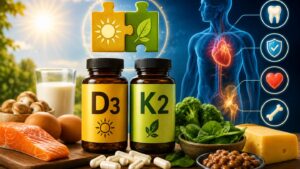
For more on vitamin D deficiency and its effects across the body, see our guide on 7 warning signs of vitamin D deficiency. Our article on vitamin D3 and K2 benefits also covers how K2 (partly produced by gut bacteria) works alongside vitamin D for bone health.
When Probiotics Can Make a Real Difference to Vitamin Absorption
Probiotics are most likely to improve vitamin absorption when the gut microbiome has been disrupted or is compromised. The clearest situations include:
- After a course of antibiotics: antibiotics kill beneficial bacteria alongside harmful ones, temporarily impairing the gut’s ability to support vitamin absorption. Taking a probiotic during and after a course helps restore the microbiome.
- With inflammatory bowel conditions: Crohn’s disease, ulcerative colitis and coeliac disease damage the gut lining and alter microbiome composition, reducing absorption of multiple nutrients including B vitamins, vitamin D and iron.
- Age-related gut changes: microbial diversity tends to decrease with age, which may contribute to the reduced B12 and vitamin D absorption seen in older adults.
- Chronic stress and poor diet: both reduce beneficial bacteria and increase gut permeability, affecting nutrient uptake.
Food-Based Probiotics vs Supplements
For most healthy people, fermented foods are an effective and practical way to support a healthy microbiome alongside adequate vitamins:
- Yogurt with live cultures: a good daily source of Lactobacillus and Bifidobacterium strains
- Kefir: a fermented dairy drink with a wider range of strains than most yogurts
- Sauerkraut and kimchi: fermented vegetables that provide fibre (prebiotic) alongside probiotic bacteria
- Miso and tempeh: fermented soy products with B vitamins and beneficial bacteria
Probiotic supplements with specific strains and CFU (colony forming unit) counts are useful when the gut has been significantly disrupted or in clinical conditions. For general gut support, food-based probiotics alongside a varied diet rich in vegetables, whole grains and legumes (which feed beneficial bacteria as prebiotics) is the most evidence-supported approach.
Eating a nutrient-dense diet also gives gut bacteria the raw materials they need to thrive. Our guide to foods that boost your immune system includes many prebiotic and nutrient-rich options.
Should You Take Probiotics and Vitamins at the Same Time?
There is no evidence that taking a probiotic and a vitamin supplement at the same time is harmful, and the 2024 research on B vitamins suggests the combination may actually be beneficial. However, a few practical points:
- Take probiotics with or just before a meal. Food buffers stomach acid, which can kill some probiotic bacteria on their way to the large intestine.
- If you are on antibiotics, take the probiotic at least 2 hours away from the antibiotic dose to avoid the antibiotic killing the probiotic bacteria before they reach the gut.
- Fat-soluble vitamins (D, K, A, E) absorb best with a meal containing some fat, regardless of whether probiotics are present.
Frequently Asked Questions
Do probiotics help with vitamin B12 absorption specifically?
The 2024 research found that Lactobacillus strains improved B12 absorption meaningfully in animal models. For people with B12 absorption problems related to gut dysbiosis or age-related changes, probiotics may support absorption, but they are not a substitute for B12 supplements or injections in people with confirmed deficiency caused by intrinsic factor deficiency.
Can probiotics improve vitamin D absorption?
Some research suggests specific probiotic strains modulate vitamin D receptor expression and support the gut environment in which vitamin D is activated. The evidence is promising but still emerging. Correcting vitamin D deficiency with supplementation remains the primary approach, and probiotics may offer a supporting role.
Should I take a probiotic after antibiotics?
Yes — there is good evidence that probiotics taken during and after antibiotic treatment help restore microbiome diversity and reduce antibiotic-associated diarrhoea. Taking the probiotic at least 2 hours away from the antibiotic dose maximises the number of probiotic bacteria that survive to reach the gut.
Which probiotic strains are best for nutrient absorption?
The 2024 research specifically identified Lactobacillus strains as improving B vitamin absorption. Lactobacillus acidophilus and Lactobacillus rhamnosus are among the most studied for gut health generally. For specific conditions, a doctor or dietitian can recommend targeted strains based on current evidence.
Final Thoughts
The relationship between your gut microbiome and vitamin absorption is more active than most people realise. Probiotics — through food or supplements — can meaningfully improve the absorption of certain B vitamins, and maintaining a healthy microbiome supports the activation and utilisation of vitamin D and other key nutrients. The clearest benefit is in people whose gut flora has been disrupted. For most healthy people, a diverse, fibre-rich diet alongside fermented foods covers both prebiotic and probiotic needs simultaneously, while making vitamins from food and supplements more available to the body.
This article is for educational purposes only and is not a substitute for professional medical advice, diagnosis or treatment.